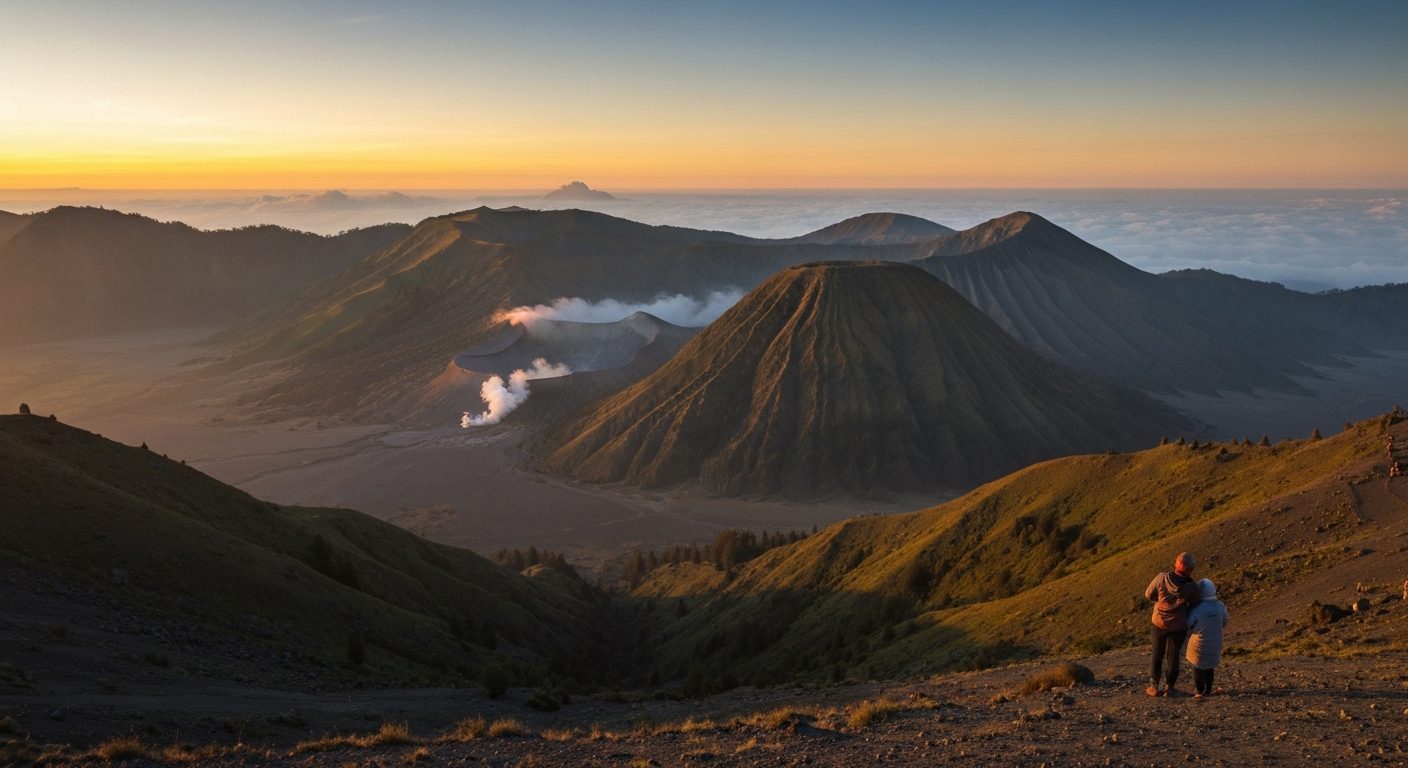
When planning your Java overland adventure, a key question often arises: for Bromo at sunrise, which viewpoint offers the most iconic, unobstructed panorama of the caldera and Mount Semeru? The short answer is Penanjakan 1, but it’s also the most crowded.
Mount Bromo’s sunrise experience is a cornerstone of any Bali-to-Java overland itinerary. It is a spectacle of light, mist, and raw volcanic power, with the sun illuminating the Bromo caldera and the distant, ever-smoking peak of Mount Semeru. But getting the shot, and the experience, requires understanding the lay of the land, the logistics, and the specific characteristics of each viewpoint. This guide will walk you through the primary options, explain their differences, and help you decide which Bromo viewpoint aligns best with your preferences for photography, crowd levels, and overall experience.
The Quest for the Iconic Shot: Why Bromo Sunrise is Non-Negotiable
For many, Bromo at sunrise is the singular image that defines the East Java experience. It’s the visual anchor of a multi-day journey that often includes the blue flames of Ijen and the ancient temples of Borobudur. The allure lies in the dramatic landscape: a vast sea of sand, the active Bromo crater puffing smoke, and the majestic Mount Semeru standing guard in the background. As the first light paints the sky, the fog lifts, revealing a scene that feels almost alien.
This isn’t just about a pretty view; it’s about the entire pre-dawn ritual. The chill of the mountain air, the rumble of the jeeps, the anticipation as you wait for the sun to break the horizon. It’s a raw, immersive experience that connects you directly with Java’s powerful geology. We’ve run the Ketapang ferry and the 2 am Ijen hike dozens of times; trust us when we say the early start for Bromo is always worth it.
Understanding Mount Bromo’s Landscape
To choose your ideal viewpoint, it helps to visualize the Bromo Tengger Semeru National Park. At its heart is the Tengger caldera, a massive ancient crater. Within this caldera sits a cluster of younger volcanoes: Mount Bromo (active), Mount Batok (extinct), and Mount Kursi. Further south, towering over everything, is Mount Semeru, Java’s highest peak and one of its most active volcanoes.
The sunrise viewpoints are primarily located on the rim of the larger Tengger caldera, offering a panoramic perspective across the sea of sand towards Bromo, Batok, and Semeru. This is why they are often called “Penanjakan” (meaning ‘viewpoint’ in Indonesian) followed by a number or descriptive name.
The Main Contenders: Bromo Sunrise Viewpoints Compared
There are several established viewpoints, each with its own advantages and disadvantages. Your choice will influence your departure time, crowd level, and photographic opportunities.
Penanjakan 1 (The Classic Viewpoint)
Penanjakan 1, often just called “Penanjakan,” is the highest and arguably the most famous viewpoint for Bromo sunrise. It sits at an elevation of approximately 2,770 meters (9,088 feet).
- The View: This is where you get the quintessential postcard shot. From here, you’ll see the entire panorama: Mount Bromo smoking gently in the foreground, Mount Batok’s distinct conical shape beside it, and the mighty Mount Semeru rising majestically behind them, often with a plume of smoke from its active summit. The vast “sea of sand” stretches out below.
- Crowd Levels: Expect significant crowds, especially during peak season (June-August, and public holidays). Jeeps arrive in droves from around 3:00 AM, and people stake out their spots early. It can feel like a stadium before a big game.
- Logistics: Most jeep tours head directly here. You’ll typically be dropped off at a parking area, followed by a walk up a paved path and stairs for about 15-20 minutes to reach the viewing platforms. There are warungs (small food stalls) selling hot drinks and snacks.
- Photography: Excellent for wide-angle landscape shots. A tripod is recommended for low-light photography before sunrise. Patience is key to getting a clear shot amidst the crowds.
King Kong Hill (Penanjakan 2)
King Kong Hill, also sometimes referred to as Penanjakan 2, is another very popular viewpoint, located slightly lower and a bit further east from Penanjakan 1. It offers a very similar, almost identical, perspective.
- The View: The panorama from King Kong Hill is remarkably similar to Penanjakan 1, capturing the same iconic lineup of Bromo, Batok, and Semeru. Some argue it offers a slightly different angle, sometimes preferred by photographers for its perspective on the caldera.
- Crowd Levels: While still popular, King Kong Hill generally sees fewer crowds than Penanjakan 1. This can make for a more relaxed experience, though “fewer” is relative during busy periods.
- Logistics: Jeeps can access this point easily. The walk from the jeep drop-off to the viewing area is generally shorter and less strenuous than Penanjakan 1, often just a few minutes. There are also basic facilities available.
- Photography: Still excellent for the classic shot, with potentially more room to set up your equipment.
Bukit Cinta (Love Hill)
Bukit Cinta, or “Love Hill,” is situated at a lower elevation and is closer to the main road leading into the national park from Cemoro Lawang.
- The View: From Bukit Cinta, the volcanoes appear closer and larger in the frame. You still get the Bromo-Batok-Semeru lineup, but the overall panorama is less expansive compared to Penanjakan 1 or King Kong Hill. It feels more intimate with the volcanoes.
- Crowd Levels: This viewpoint is significantly less crowded than Penanjakan 1 or King Kong Hill. It’s often used as an alternative when the main viewpoints are full, or for those who prefer a quieter experience.
- Logistics: It’s easily accessible by jeep and often requires a minimal walk. It’s also sometimes a quick stop for photos after visiting the main viewpoints.
- Photography: Good for capturing the volcanoes with a slightly more zoomed-in feel. The closer proximity can be an advantage for certain compositions.
Seruni Point
Seruni Point is a newer, developed viewpoint that has gained popularity in recent years. It’s often accessible via a series of concrete steps and platforms.
- The View: Seruni Point offers a fantastic, unobstructed view of the Bromo caldera, Batok, and Semeru. It’s a well-maintained area with good infrastructure.
- Crowd Levels: It can be busy, but often less so than Penanjakan 1, and the tiered platforms can help distribute visitors more effectively.
- Logistics: Jeeps usually drop you at a parking area, and then it’s a walk up a relatively steep path or steps. This walk can be 10-20 minutes, depending on your pace.
- Photography: Excellent, with good angles and sturdy platforms. The modern infrastructure provides comfortable viewing.
Sunrise Viewpoints Quick Comparison
To help you decide, here’s a quick overview of the main Bromo sunrise viewpoints:
- Penanjakan 1
-
- View: Classic, highest, most panoramic Bromo-Batok-Semeru shot.
- Crowds: Heavily crowded, especially peak season.
- Access: Jeep drop-off, then 15-20 min uphill walk/stairs.
- Photography: Iconic wide-angle. Tripod recommended. Patience needed.
- Best For: First-timers, those wanting the quintessential view despite crowds.
- King Kong Hill (Penanjakan 2)
-
- View: Very similar to Penanjakan 1, slightly lower, equally panoramic.
- Crowds: Popular, but generally less crowded than Penanjakan 1.
- Access: Jeep drop-off, then short, easy walk.
- Photography: Excellent, similar to Penanjakan 1 with slightly more space.
- Best For: Those seeking the iconic view with slightly fewer people.
- Bukit Cinta (Love Hill)
-
- View: Closer perspective of volcanoes, less expansive panorama.
- Crowds: Much less crowded, quieter experience.
- Access: Easy jeep access, minimal walk.
- Photography: Good for closer compositions, less suitable for grand wide shots.
- Best For: Avoiding crowds, quick access, alternative view.
- Seruni Point
-
- View: Excellent, unobstructed view of the caldera and volcanoes.
- Crowds: Can be busy, but often less dense than Penanjakan 1 due to tiered platforms.
- Access: Jeep drop-off, then 10-20 min uphill walk/steps.
- Photography: Great angles, good infrastructure for stable shots.
- Best For: Good balance of view quality and manageability of crowds, modern facilities.
Beyond Sunrise: Bromo Sunset View Options
While Bromo is famous for its sunrise, the region also offers compelling bromo sunset view tour vs sunrise from bali options, though they are less frequently chosen. The key difference is the perspective. Sunrise viewpoints look across the caldera towards Semeru. Sunset views often look at Bromo itself, or from a different angle that captures the changing light over the vast landscape.
Dedicated sunset tours are less common because most travelers are on multi-day itineraries that prioritize the iconic sunrise. However, if you have extra time or prefer a different perspective, here are some considerations:
- Closer to the Caldera: Some areas closer to the Bromo crater rim or even from the edge of the Sea of Sand can offer a unique perspective of the volcano as the sun dips. This isn’t the classic panoramic shot, but a more intimate view of Bromo itself.
- Mount Batok/Bromo Slopes: Certain spots on the lower slopes of Mount Batok or even the path leading up to Bromo’s crater can provide interesting sunset photography angles, particularly if you want to capture the interplay of light and shadow on the volcanic cones.
- Less Crowded: Sunset experiences are significantly less crowded than sunrise. This can be a major draw for photographers or those seeking solitude.
- Logistics: Arranging a sunset view requires specific coordination, as it often means an extra night in the Bromo area or a dedicated evening trip. It’s not typically part of the standard Bali-to-Java circuit which moves travelers efficiently from Bromo to Ijen.
For most travelers on a tight schedule, prioritizing the sunrise is the standard. It is the iconic Bromo experience.
Bromo vs. Ijen: Which Volcanic Experience is Right for You?
Many travelers ask, “bromo vs ijen which is better?”. The truth is, they offer distinctly different, yet equally compelling, volcanic experiences. They are often paired together in a bromo ijen tour comparison reviews because of their proximity in East Java and the unique natural phenomena each presents.
Here’s a breakdown to help you prioritize or understand what to expect from each:
Mount Bromo
- Experience: Grand, panoramic landscape photography. The iconic sunrise over the caldera with Semeru in the background, followed by a walk across the Sea of Sand to Bromo’s crater rim.
- Physicality: Relatively low-impact. A jeep ride to the viewpoint, then a moderate walk (15-20 minutes) up to the viewing platforms. The walk across the Sea of Sand to the Bromo crater (about 3 km round trip) is flat, followed by a short, steep climb up steps to the crater rim.
- Highlights: Iconic sunrise, vast volcanic desert, active crater, jeep adventure.
- Timing: Requires a very early start (jeep departure around 3:00 AM) to reach the viewpoint before sunrise.
- Equipment: Warm layers are essential for the pre-dawn cold. Comfortable walking shoes.
Kawah Ijen
- Experience: The rare blue flames inside the crater (visible only in darkness), a vibrant turquoise acidic crater lake, and the sight of sulfur miners at work.
- Physicality: Demanding. A challenging hike (2-3 km, 1.5-2 hours) up a steep, sometimes slippery, path to the crater rim. An optional further descent into the crater (another 30-45 minutes down a rocky path) to see the blue flames up close. Requires good physical fitness.
- Highlights: Blue flames (natural phenomenon), turquoise acidic lake, sulfur miners, unique geological insights.
- Timing: Even earlier start than Bromo (jeep departure around 2:00 AM) to reach the crater for blue flame viewing before dawn.
- Equipment: Warm layers, sturdy hiking shoes, headlamp, and a gas mask (provided by guides, essential for sulfur fumes).
Which to Prioritize?
If you only have time for one, consider:
- Bromo is generally more accessible and visually grand for a classic volcanic landscape. It’s often recommended for those with less hiking experience or who prioritize sweeping views.
- Ijen is for the adventurous, those seeking a truly unique and physically demanding experience with the rare blue flames and cultural insight into the sulfur mining.
Most of our 3D2N, 4D3N, or 5D4N Bali-to-Java itineraries combine both Bromo and Ijen, as they complement each other perfectly, offering a comprehensive volcanic journey. For example, a typical 3D2N itinerary might involve arriving in East Java, experiencing Bromo sunrise on Day 2, and Ijen blue fire on Day 3 before returning to Bali.
Planning Your Bromo Sunrise: Logistics, Timing, and Crowds
Understanding the practicalities is crucial for a smooth Bromo experience. This includes knowing the bromo ijen sunrise timing schedule, how jeeps operate, and managing expectations around crowds.
The Pre-Dawn Ritual
Your Bromo sunrise experience begins long before the sun makes an appearance.
- Wake-up Call: Expect a wake-up call around 2:30 AM from your accommodation near Cemoro Lawang or Sukapura.
- Jeep Departure: Jeeps typically depart between 3:00 AM and 3:30 AM. This early start is vital to secure a good spot at your chosen viewpoint. The ride to the viewpoints can take 45-60 minutes, often bumpy and chilly in the open-air jeeps.
- Waiting for Sunrise: You’ll arrive at the viewpoint in complete darkness. This is when you find your spot, set up your camera if you have one, and grab a hot drink from a local warung. Sunrise is generally between 5:15 AM and 5:45 AM, depending on the time of year.
- Post-Sunrise: After the sun is fully up and you’ve soaked in the views, the jeep will take you down into the Sea of Sand. From there, you’ll walk to the base of Bromo, climb the steps to its crater rim, and peer into the smoking caldera. This entire sequence usually concludes by 8:00 AM – 9:00 AM.
Managing Crowds
Crowds are an inherent part of the Bromo sunrise experience, especially at Penanjakan 1.
- Peak Season: From June to August, and during major Indonesian holidays (Eid al-Fitr, Christmas, New Year), Bromo sees its highest visitor numbers. Expect very full viewpoints.
- Weekends vs. Weekdays: Weekends are generally busier than weekdays. If your schedule allows, aim for a weekday visit.
- Viewpoint Choice: As discussed, Penanjakan 1 is the busiest. King Kong Hill and Seruni Point offer slightly more breathing room, while Bukit Cinta is the quietest. Your local guide will help navigate this on the day.
- Patience: A key ingredient for enjoying the experience amidst many others.
What to Expect from a Mount Bromo Sunrise Tour From Ubud (or other Bali locations)
If you’re starting your journey from Bali, say on a mount bromo sunrise tour from ubud, the logistics are a bit more involved.
- Bali Pickup: You’ll be picked up from your accommodation in Ubud (or other areas like Seminyak, Canggu, Kuta, Sanur) in the morning or early afternoon.
- West Bali Drive: A drive across Bali to Gilimanuk port, which can take around 4 hours from South Bali areas.
- Ferry Crossing: A short (~1 hour) ferry ride from Gilimanuk to Ketapang, East Java.
- Overland Drive: A significant overland drive from Ketapang to your accommodation near Bromo (Cemoro Lawang or Sukapura area), which is typically 5-6 hours. This usually means arriving in the evening, having dinner, and getting a few hours of sleep before the early Bromo sunrise start.
- Bromo Experience: The next day is the full Bromo sunrise and crater experience.
- Continue to Ijen or Return: Depending on your itinerary (e.g., 3D2N, 4D3N), you’ll either continue to the Ijen area (a 2-3 hour drive) or begin your return journey to Bali.
This multi-day journey is carefully orchestrated by our team. We ensure smooth transfers, vetted local drivers, and comfortable accommodation options to make the challenging logistics feel seamless.
Tips for the Best Bromo Sunrise Photography
For those looking to capture the perfect shot and understand the best viewpoint for bromo sunrise photography, here are some practical tips:
- Arrive Early: This cannot be stressed enough. Getting to your chosen viewpoint well before sunrise (at least an hour) gives you time to find a good spot, set up, and scout your composition.
- Gear:
- Camera: A DSLR or mirrorless camera with a wide-angle lens (e.g., 16-35mm or 24-70mm) is ideal for capturing the expansive landscape.
- Tripod: Absolutely essential for sharp low-light shots before sunrise and for long exposures to capture the moving clouds or mist.
- Remote Shutter Release: Helps avoid camera shake.
- Extra Batteries: Cold weather drains batteries faster.
- Headlamp: Crucial for navigating in the dark.
- Settings:
- ISO: Start with a higher ISO (e.g., 800-1600) in the dark, then lower it as light increases.
- Aperture: f/8 to f/11 for a good depth of field, keeping both foreground (if any) and background sharp.
- Shutter Speed: Will vary significantly. Use your tripod and take test shots. Before sunrise, it could be several seconds. As the sun rises, it will shorten.
- RAW Format: Always shoot in RAW for maximum flexibility in post-processing.
- Composition:
- Rule of Thirds: Position the horizon or key elements along the grid lines.
- Leading Lines: Use the paths or contours of the landscape to draw the viewer’s eye.
- Foreground Interest: Look for small trees, rocks, or even other people to add scale and depth.
- Patience: Wait for the light. The colors change dramatically in the minutes just before and after the sun crests the horizon. The “golden hour” after sunrise is often just as good, if not better, for vibrant colors.
- Consider the Clouds/Mist: Bromo is often shrouded in mist in the early morning. Sometimes this adds to the drama, other times it obscures the view. Be flexible and embrace the conditions. No one can guarantee clear skies.
Ultimately, the best viewpoint for photography is often the one where you feel most comfortable, have the most space, and can set up your gear without too much interference. For the truly iconic shot, Penanjakan 1 or King Kong Hill are your best bets, despite the crowds.
Ready to see Bromo for yourself? Our team at Bali Premium Trip specializes in creating seamless overland itineraries from Bali to Java. We handle all the complex logistics, from ferry crossings to jeep arrangements and local guides, ensuring you get to experience these incredible sights without the stress.
Booking Your Bali-to-Java Overland Adventure
Deciding on bromo at sunrise which viewpoint is just one step in planning your comprehensive Bali-to-Java overland circuit. At Java Overland Tour, operated by Bali Premium Trip, we simplify this complex journey. We pride ourselves on transparent, direct bookings with our Bali reservations team at published rates, free from third-party markups.
We don’t own the jeeps or the hotels, but we meticulously vet and partner with licensed local operators in East Java who deliver reliable transport, experienced guides, and comfortable accommodation. This means your jeep to Penanjakan 1 (or King Kong Hill, or Seruni Point) will be ready at 3:00 AM, your gas mask for Ijen will be on hand, and your transfers will be coordinated seamlessly.
An indicative price range for a private 3-day, 2-night Bromo-Ijen overland trip from Bali is around US$450-750 per person, depending on accommodation choices (standard vs. comfort), group size, and season. This typically includes transfers, accommodation, jeep hire, local guides, and park entrance fees. Prices are last verified June 2026 and are subject to change based on local operator rates and currency fluctuations. We do not guarantee fixed single-company quotes due to the dynamic nature of local operating costs.
We manage the entire itinerary, from your pickup in Bali, through the Ketapang-Gilimanuk ferry, to your Bromo and Ijen experiences, and your onward journey. Our goal is to turn confusing logistics into clear, private itineraries, ensuring your adventure feels well-supported and genuinely rewarding.
What We Arrange for You:
- Transfers: Private air-conditioned vehicles from your Bali hotel, to the ferry, across Java, and back to Bali or your next destination.
- Ferry Tickets: Seamless crossing of the Ketapang-Gilimanuk strait.
- Accommodation: Vetted hotels or guesthouses near Bromo and Ijen, chosen for their comfort and proximity.
- Bromo Jeep Tour: Private 4×4 jeep and experienced driver for your sunrise viewing and crater visit.
- Ijen Blue Fire Tour: Local licensed guide, headlamps, and gas masks for the pre-dawn hike.
- Park Entrance Fees: All necessary national park permits are included.
We focus on delivering what our on-ground partners can truly deliver, ensuring a smooth, authentic, and memorable journey across Java’s volcanic heartland.
FAQs
Which Bromo viewpoint is least crowded?
Bukit Cinta (Love Hill) is generally the least crowded of the main viewpoints. It offers a closer view of the volcanoes but a less expansive panorama compared to Penanjakan 1 or King Kong Hill. If avoiding crowds is your top priority, it’s a good alternative.
What time should I leave for Bromo sunrise?
Your jeep will typically depart from your accommodation near Cemoro Lawang or Sukapura between 3:00 AM and 3:30 AM. This early start ensures you reach your chosen viewpoint and secure a good spot before the sun begins to rise, usually between 5:15 AM and 5:45 AM.
Is it possible to see both Bromo and Ijen in one trip from Bali?
Yes, it is very common and highly recommended. Most of our itineraries, such as the 3D2N or 4D3N options, are designed to combine the Bromo sunrise and Ijen blue fire experiences seamlessly. This involves significant overland travel and early starts but allows you to witness both of East Java’s iconic volcanic wonders.
What should I wear for the Bromo sunrise?
The mountain air before dawn is very cold, especially at higher elevations. You should wear multiple warm layers, including a jacket, hat, gloves, and thick socks. Sturdy, closed-toe walking shoes are also essential for paths to the viewpoints and walking across the Sea of Sand.
Can I guarantee good weather and visibility for Bromo sunrise?
No, weather and visibility at Mount Bromo are unpredictable and cannot be guaranteed. While the dry season (typically April to October) offers the best chances for clear skies, mist, fog, or rain can occur at any time. We cannot guarantee perfect conditions, but the experience is still dramatic even with some cloud cover.
Ready to Plan Your Bromo-Ijen Adventure? Contact Us Via WhatsApp!