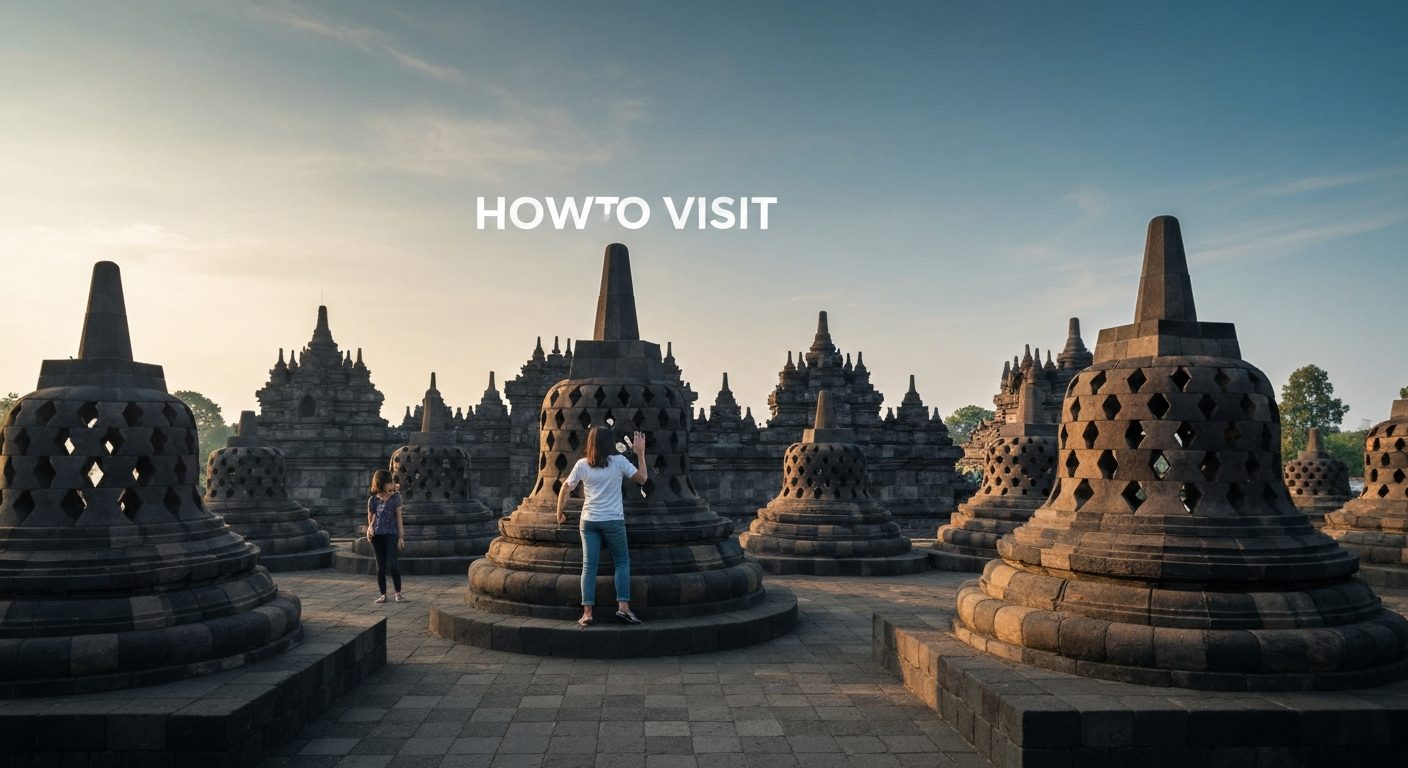
If you’re planning a trip to Central Java, understanding borobudur temple how to visit is key to a smooth experience. This guide cuts through the noise, offering clear, logistics-first advice for travelers integrating Borobudur into a Bali-to-Java circuit.
Borobudur Temple is a UNESCO World Heritage site, the largest Buddhist temple in the world. Its sheer scale and intricate carvings make it a must-see. But getting there, managing entry, and often-confusing ticket system requires solid planning. As Java Overland Tour Editorial Desk, Java Overland Route & Logistics Editor, my job is to ensure you avoid common pitfalls. We at Java Overland Tour, operated by Bali Premium Trip, focus on turning these complex logistics into clear, private itineraries.
Getting to Borobudur Temple: From Bali, Yogyakarta, and Beyond
Borobudur Temple is located in Central Java, approximately 40 kilometers northwest of Yogyakarta city. Your starting point dictates the most practical approach.
From Bali to Borobudur: The Overland Route
For many travelers, Borobudur is part of a larger Bali-to-Java overland adventure. This typically involves a multi-day journey covering distances and managing various transport types. We specialize in these circuits.
- Step 1: Bali to Ketapang (East Java)
- This is a land transfer across Bali to the Gilimanuk ferry port. The drive from South Bali can take 3-5 hours, depending on traffic and your exact location. At Gilimanuk, you’ll board the ferry to Ketapang, East Java. Ferries run 24/7, departing every 15-30 minutes. The crossing itself takes about 45-60 minutes, plus loading/unloading time. It’s a fundamental part of the overland route.
- Step 2: Ketapang to Yogyakarta (or intermediate stops)
- From Ketapang, the journey to Yogyakarta is substantial. It’s often broken up with stops at Mount Ijen and/or Mount Bromo. A direct drive from Ketapang to Yogyakarta would be a very long day, typically 10-12 hours or more without significant stops. Most of our Bali Premium Trip itineraries integrate Borobudur at the end of a Bromo-Ijen segment, or as a standalone trip from Yogyakarta.
- Overland Tours: Seamless Transfers
- Booking a private tour with us means all these transfers are pre-arranged. You’ll have a dedicated driver and vehicle, ensuring comfort and efficiency. Our team coordinates ferry crossings, hotel check-ins, and onward travel, making the Bali-to-Yogyakarta leg feel less like a series of disjointed rides and more like a fluid journey.
From Yogyakarta to Borobudur
If you’re already in Yogyakarta, getting to Borobudur is straightforward. It’s the most common approach.
- Private Car with Driver: This is the most flexible and comfortable option. A private car allows you to set your own pace, stop for photos, and easily combine Borobudur with other sites like Prambanan Temple or local craft villages. The drive takes about 1-1.5 hours each way, depending on traffic. This is how Bali Premium Trip arranges your transfers.
- Ride-Hailing Apps: Grab and Gojek operate in Yogyakarta and can take you to Borobudur. This can be a more budget-friendly option for solo travelers or small groups, but you might need to negotiate for the return trip or arrange a new pick-up, which can be less convenient.
- Public Bus: The cheapest option, but also the most time-consuming and least comfortable. You’d take a local bus from Yogyakarta’s Jombor Bus Terminal to Borobudur. It involves transfers and can be confusing without local language skills. We generally don’t recommend this for efficiency on a tight itinerary.
Borobudur Ticket Booking Advance Required: Entry Rules and Upper Platform Access
Visiting Borobudur isn’t just about showing up. There are specific rules regarding tickets, especially for accessing the upper levels. These rules have been put in place to protect the temple’s integrity and manage visitor flow.
General Entry Tickets
All visitors require an entrance ticket. These are managed by PT Taman Wisata Candi Borobudur, Prambanan & Ratu Boko (TWC), the official park operator. You can purchase tickets on arrival at the ticket counter, but for peace of mind and to avoid queues, especially during peak season, we recommend advance booking, which Bali Premium Trip facilitates as part of your tour package.
Indicative Foreign Visitor Entrance Fees (last verified June 2026):
- Standard Ground-Level Access: Around IDR 450,000-500,000 (roughly US$28-32) per person. This allows you to explore the lower terraces and surrounding park area.
- Upper Stupa Platform Access: This is a separate, additional ticket and is strictly limited. Expect an additional fee, potentially in the range of IDR 350,000-400,000 (US$22-25) per person, on top of the ground-level ticket.
- Combo Borobudur & Prambanan Ticket: TWC offers a combo ticket valid for both temples, which can be cost-effective if you plan to visit both. This typically ranges IDR 700,000-750,000 (US$45-48) for ground-level access to both.
The Capped Stupa-Zone Upper-Platform Booking
This is the crucial detail many travelers miss. Since 2022, access to the upper nine terraces, including the circular platforms with the iconic bell-shaped stupas, has been restricted.
- Capacity Limit: Only 1200 visitors are allowed onto the upper levels per day.
- Guided Access: You must be accompanied by a licensed guide provided by TWC. This is mandatory. Our Bali Premium Trip tours include arrangements for these licensed local guides.
- Specific Time Slots: Access is granted in specific time slots, usually for a duration of 60-90 minutes.
- Special Footwear: Visitors to the upper levels are often required to wear special sandals provided by the park to protect the stone. You can’t wear your own shoes.
Why is this important? If your dream is to walk among the stupas and see the Buddha statues up close, you *must* secure this separate upper-platform ticket in advance. It’s not included in the standard ground ticket, and it sells out. Bali Premium Trip’s reservations team coordinates these bookings with TWC to ensure your access.
Borobudur Sunrise Tour From Bali: The Reality vs. The Myth
Many travelers aspire to witness a Borobudur sunrise. It’s often marketed as a serene, mystical experience. However, there’s a distinction between the “official” sunrise experience and simply being at the temple when the sun rises.
The “Official” Manohara Sunrise Package
Historically, the Manohara Hotel, located within the temple complex, offered an exclusive early-morning sunrise package. This package typically allowed guests to enter the temple grounds before the general opening hours (6 AM), ascend the temple in the dark, and watch the sunrise from one of its upper terraces.
- Status Update: As of June 2026, the Manohara sunrise package is subject to frequent changes and availability. It is often suspended or operating with significantly altered access rules. Crucially, even if available, it typically only grants access to the lower or middle terraces for sunrise, not necessarily the very top stupa levels, which are still under the 1200-person daily cap.
- Cost: This package was historically more expensive than regular entry, often around IDR 450,000-500,000 (US$28-32) on top of standard entry.
The Honest Truth: While a sunrise from the temple itself *was* a unique experience, current regulations mean that watching the sunrise from a nearby hill, like Punthuk Setumbu, is often a more reliable and equally beautiful option for seeing the temple bathed in early light. You get the iconic silhouette shot without the logistical headaches or uncertainty of the temple’s “official” sunrise access.
Watching Sunrise from a Nearby Viewpoint
Most borobudur sunrise tour from bali itineraries, including those arranged by Bali Premium Trip, will take you to an elevated viewpoint like Punthuk Setumbu or Gereja Ayam (Chicken Church Hill).
- Advantages: You get a panoramic view of Borobudur emerging from the mist, often with Mount Merapi and Merbabu in the background. It’s less crowded than trying to be on the temple itself, more reliable, and offers a classic photo opportunity.
- Timing: You’ll typically depart your hotel around 3:30-4:00 AM to reach the viewpoint before dawn.
- After Sunrise: After sunrise, your guide and driver will take you to Borobudur Temple for your regular ground-level and pre-booked upper-platform visit once it opens at 6 AM.
Borobudur Sunrise Tour Mistakes to Avoid
Based on experience, here are a few common errors:
- Assuming Top-Level Sunrise Access: Don’t assume your “sunrise tour” will automatically put you on the very top stupa levels at dawn. Verify the exact access points. It’s almost always a separate arrangement now.
- Not Booking Upper Platform in Advance: If you want to walk among the stupas, this separate ticket is non-negotiable and must be secured well in advance.
- Underestimating Travel Time: From Yogyakarta, an early start is required. From Bali, it’s a multi-day journey. Don’t rush it.
- Ignoring Dress Code: More on this below, but come prepared.
- Expecting Solitude: Borobudur is popular. Even at sunrise from a viewpoint, you won’t be alone. Manage expectations.
Borobudur Temple Dress Code Requirements
Borobudur is a sacred Buddhist site. Respectful attire is expected from all visitors. This isn’t just a suggestion; it’s often enforced at the entrance.
- Shoulders and Knees Covered: The primary rule. Both men and women should wear clothing that covers their shoulders and knees. This means no tank tops, spaghetti straps, short shorts, or mini-skirts.
- Sarongs: If your clothing doesn’t meet the requirement, you will likely be provided with a sarong to wear over your clothes at the entrance. While convenient, it’s better to come prepared to avoid delays.
- Footwear: Comfortable walking shoes are essential. You’ll be climbing many stairs and walking on uneven surfaces. For the upper stupa platforms, you’ll be required to switch to special sandals provided by TWC.
- Sun Protection: While not strictly a dress code, remember a hat and sunglasses, especially if visiting during the day. The sun can be intense, and there’s little shade on the temple itself.
Our Bali Premium Trip guides will remind you of these requirements before your visit to ensure you’re prepared.
Borobudur Vesak 2026 Dates and Ceremony: How to Attend as a Tourist
Vesak (Waisak in Indonesian) is the most important Buddhist holiday, commemorating the birth, enlightenment, and passing of Gautama Buddha. Borobudur becomes the focal point for celebrations in Indonesia, drawing thousands of Buddhist pilgrims from around the world. It’s a powerful and spiritual experience.
Borobudur Vesak 2026 Dates
Vesak is celebrated on the full moon in May or June. The dates shift slightly each year according to the lunar calendar.
- Borobudur Vesak 2026 Dates and Ceremony:
- The main Vesak ceremony at Borobudur is expected to take place around the full moon in May 2026. Preliminary dates suggest the main activities will occur from May 12-14, 2026, with the full moon falling on May 13, 2026. However, these dates are provisional and always subject to final confirmation by the Indonesian Buddhist community and the government.
- Key Ceremonies:
- The festival usually involves a procession of monks and devotees from Mendut Temple to Pawon Temple, and then on to Borobudur. The peak is a circumambulation (Pradaksina) around Borobudur, followed by a lantern release ceremony in the evening, symbolizing enlightenment and letting go of negative thoughts.
How to Attend Vesak at Borobudur as Tourist
Attending Vesak as a tourist is possible, but requires careful planning and a deep sense of respect.
- Book Far in Advance: Accommodation in Yogyakarta and near Borobudur sells out months in advance. Flights and private tours also become scarce. If you plan to visit for Vesak, confirm your arrangements with Bali Premium Trip at least 6-12 months ahead.
- Respectful Observation: This is a religious ceremony, not a spectacle. Maintain silence, dress modestly (even more strictly than usual), and avoid obstructing pilgrims. Photography is generally allowed but be discreet and do not use flash during sensitive moments.
- Limited Access: During the actual ceremony days, access to the temple itself, especially the upper levels, may be heavily restricted or completely closed to general tourists for security and to facilitate the pilgrims. You might primarily observe from the temple grounds or designated viewing areas.
- Crowds: Expect very large crowds. Patience is essential.
- Flexible Itinerary: Events and timings can change with little notice. A flexible mindset is key. Our guides will keep you informed of any real-time adjustments.
If you wish to experience Vesak, our team can help you navigate the complexities and arrange your visit with the utmost respect for the spiritual significance of the event.
Accessibility: Wheelchair-Friendly Access Borobudur Prambanan 2026
Accessibility for visitors with mobility challenges is an important consideration for Borobudur and Prambanan Temples. While improvements have been made, the nature of these ancient structures presents inherent limitations.
Borobudur Temple Accessibility
- Ground Level: The pathways around the temple base are generally wide and paved, making them suitable for wheelchairs. You can get close enough to appreciate the temple’s grandeur and see the intricate base reliefs.
- Upper Levels: Accessing the upper terraces and stupa zone involves climbing numerous steep steps. There are no ramps or elevators to these levels. Therefore, the upper levels are NOT wheelchair-friendly. Visitors must be able to navigate stairs independently.
- Assistance: TWC staff may be available for limited assistance on the ground level, but this cannot be guaranteed. Our private guides from Bali Premium Trip can assist with pushing wheelchairs on the ground level and providing general support.
- Restrooms: Accessible restrooms are available in the visitor center area.
Prambanan Temple Accessibility
Prambanan, a Hindu temple complex, is generally more accessible than Borobudur for ground-level exploration.
- Ground Level: The complex is vast, with wide, flat pathways connecting the main temple compounds. This makes it largely wheelchair-friendly for exploring the outer courtyards and viewing the main temples from ground level.
- Inside Temples: Entering the individual temple structures (e.g., the Shiva temple) requires climbing steep, narrow stairs. These inner chambers are NOT wheelchair-friendly.
- Distance: Be aware that the distances within the Prambanan complex can be significant.
Planning for Wheelchair-Friendly Access Borobudur Prambanan 2026
For travelers requiring wheelchair access:
- Communicate Needs: Inform our Bali Premium Trip reservations team in advance about any specific mobility requirements. This allows us to plan routes, vehicle types, and guide support accordingly.
- Focus on Ground-Level: Plan your expectations around enjoying the temples from their accessible ground levels.
- Private Transport: Private cars arranged by Bali Premium Trip offer door-to-door service, minimizing walking distances within parking areas.
Borobudur & Prambanan Yogyakarta Tour Best Time to Visit
Timing your visit impacts your experience, from crowd levels to weather. Considering both temples together is common, as they are both near Yogyakarta.
Best Season to Visit
- Dry Season (May to September): This is generally considered the best time to visit Borobudur and Prambanan. You’ll experience less rain, clearer skies, and lower humidity. This is ideal for photography and comfortable exploration. However, it’s also peak tourist season, meaning more crowds.
- Shoulder Seasons (April & October): These months offer a good balance. The weather is usually still pleasant with fewer tourists than the peak dry season. You might encounter occasional rain showers, but they are often brief.
- Wet Season (November to March): Expect frequent heavy rain, higher humidity, and potentially overcast skies. While the temples are still open, rain can disrupt plans and make walking around less comfortable. On the plus side, there are fewer tourists, and the surrounding landscape is lush and green.
Best Time of Day to Visit
- Early Morning (6 AM – 8 AM): This is hands down the best time to visit Borobudur. The temple opens at 6 AM. Arriving right at opening allows you to experience the temple with fewer crowds, enjoy cooler temperatures, and capture the soft morning light. If you’ve done a sunrise tour from a viewpoint, you’ll arrive at the temple just as it opens.
- Late Afternoon (3 PM – 5 PM): The second-best time. Crowds start to thin out, and the light for photography is beautiful as the sun begins to set. However, you’ll be dealing with the day’s heat. The temple closes at 5 PM.
- Mid-Day (10 AM – 2 PM): This is the busiest and hottest time. Avoid if possible, especially if you dislike crowds or intense sun.
Combining Borobudur and Prambanan
Many visitors choose to visit both temples in a single day, often as part of a borobudur prambanan yogyakarta tour best time itinerary. This is feasible with private transport.
- Typical Itinerary: Start with Borobudur early morning (sunrise viewpoint + temple visit), then head back towards Yogyakarta, stopping at Prambanan in the late morning or early afternoon.
- Travel Time: The drive between Borobudur and Prambanan, via Yogyakarta’s outskirts, takes approximately 1.5-2 hours, depending on traffic.
Integrating Borobudur into Your Bali-Java Overland Trip
This is where our expertise at Java Overland Tour, operated by Bali Premium Trip, truly shines. We take the confusion out of the multi-destination circuit.
A typical Bali-to-Yogyakarta overland trip, incorporating Bromo and Ijen, might look like this:
- Day 1: Bali to Ijen Area
- Morning transfer from Bali to Gilimanuk, ferry to Ketapang. Drive to your accommodation near Ijen. This is often a full day of travel.
- Day 2: Ijen Blue Fire & Bromo Area
- Pre-dawn Ijen crater trek for the blue flame (if conditions permit) and sunrise. Return for breakfast, then a drive to the Bromo region (typically 4-6 hours).
- Day 3: Bromo Sunrise & Yogyakarta
- Early morning jeep tour for Bromo sunrise viewpoint, then trek to the Bromo crater. Return to hotel for breakfast. Long drive to Yogyakarta (8-10 hours). This can be strenuous, but it’s efficient.
- Day 4: Borobudur & Prambanan
- Full day exploring Borobudur (sunrise viewpoint + temple visit) and Prambanan Temples. Often with a visit to Yogyakarta city highlights.
This 4-day sequence is common. We can extend it to 5 days or more for a more relaxed pace, adding stops like Malang or local cultural experiences. The key is balance. Rushing a trip makes it feel like a checklist. A seamless trip allows for discovery.
We pressure-test every overland-versus-flight option. While flying from East Java (Surabaya or Malang) to Yogyakarta might save a long drive day, it adds airport transfers, check-in, and waiting times. For many, the direct overland approach, managed by our experienced drivers and vehicles, is often more efficient and provides a continuous journey experience.
Ready to Plan Your Borobudur Adventure?
logistics of a multi-destination Bali-to-Java trip, especially with Borobudur’s specific entry rules and sunrise options, can be complex. Let our team at Bali Premium Trip handle the details.
We provide private, custom-designed itineraries, vetted licensed local operators, and transparent pricing. You book directly with our Bali reservations team, ensuring clear communication and no third-party markups.
Experience the difference of a well-planned trip. Plan your trip with us today, or send us a WhatsApp message to start a conversation.
Frequently Asked Questions
Is Borobudur Temple worth visiting?
Absolutely. As the largest Buddhist temple in the world and a UNESCO World Heritage site, Borobudur is an architectural marvel and a deeply spiritual place. Its intricate relief carvings and unique design offer a profound cultural and historical experience that stands apart from other attractions in Indonesia. The scale alone is impressive.
How much time should I allocate for Borobudur?
To fully appreciate Borobudur, plan for at least 2-3 hours on site. This allows time to walk around the base, study the relief panels, and if you have the special upper-platform ticket, spend 60-90 minutes exploring the stupa levels. Add travel time from Yogyakarta (1-1.5 hours each way) and a potential sunrise viewpoint visit (1-1.5 hours pre-dawn), your overall excursion will be around 6-8 hours.
Can I visit Borobudur and Prambanan in one day?
Yes, it’s a popular and feasible option with private transport. We arrange many such tours. Typically, you’d visit Borobudur early in the morning, then drive to Prambanan for a late morning or early afternoon visit. The drive between the two, via Yogyakarta, takes about 1.5-2 hours. It makes for a full day of temple exploration.
Do I need a guide for Borobudur?
While you can explore the ground level independently, a licensed local guide is mandatory if you wish to access the upper stupa platforms. Even for ground-level visits, a guide significantly enhances the experience by explaining the temple’s history, symbolism, and the stories depicted in its relief carvings. Our Bali Premium Trip tours always include arrangements for licensed local guides.
What is the difference between the Borobudur sunrise tour and regular entry?
The “official” Borobudur sunrise tour (historically via Manohara Hotel) allowed early entry to the temple grounds before 6 AM. Regular entry is from 6 AM onwards. However, current regulations often mean that even early access does not guarantee top-level stupa access for sunrise. Many tours, including ours, now opt for a sunrise experience from a nearby hill viewpoint, offering panoramic views of the temple, followed by a regular entry visit to the temple itself after it opens.
Ready to explore Borobudur without the planning hassle?
Our Bali Premium Trip team is here to craft a private, seamless itinerary for your Java adventure, including all the logistics for Borobudur, Bromo, Ijen, and beyond. We connect you with vetted local partners and ensure transparent, direct bookings.