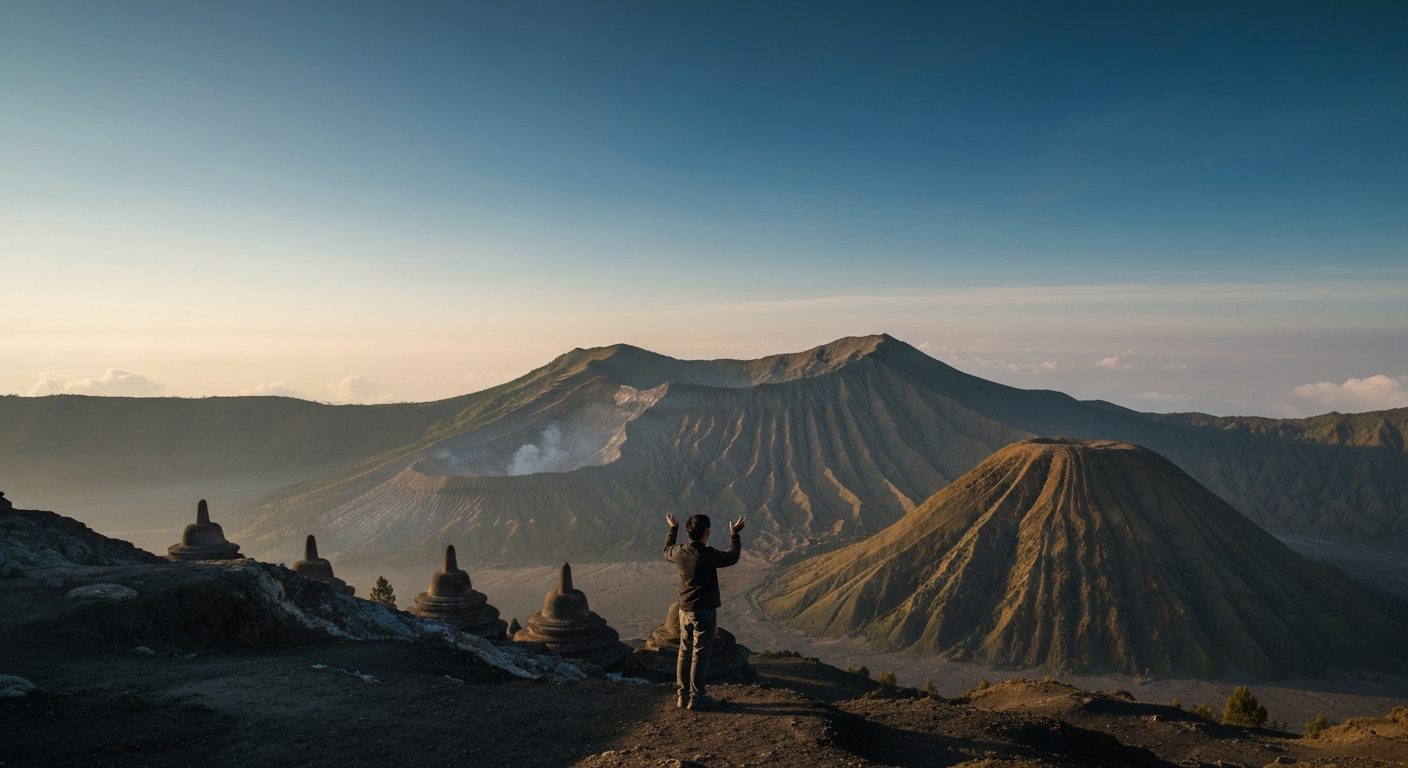
The best time visit bromo ijen bali is generally during Java’s dry season, roughly May to September, when sunrise views, jeep access and Ijen’s blue fire line up most consistently. Outside this window you can still travel, but you need to accept higher risk of cloud, rain and occasional crater closures, especially from December to February.
I’m Java Overland Tour Editorial Desk, Trip Planning & Safety Researcher at Java Overland Tour, operated by Bali Premium Trip. I’ve done the late-night ferry runs, the 2–3 am Bromo wake-up calls and the Ijen gas briefings more times than I can count, and this page pulls that experience into one practical question: when should you actually go from Bali to Java for Bromo, Ijen and possibly Borobudur?
This guide stays simple:
- Dry season: what to expect, why June–August is the usual “sweet spot”.
- Rainy season: what really happens to sunrises, blue fire and safety.
- A month‑by‑month calendar so you can match your dates to conditions.
- July/August crowds and how far ahead to book jeeps, guides and hotels.
- How to sync a Java side-trip with a Bali holiday via the Ketapang ferry.
All weather and visibility comments here are general patterns only, based on long-run climate averages and on-the-ground experience. Any given week can be different. There is never a 100% guarantee of clear sunrise or blue fire.
—
Dry season (May–September): the reliable window for Bromo & Ijen
For most travellers asking “best time visit bromo ijen”, the short planning answer is May to September, with a strong case for June–July–August if you want to stack the odds in your favour.
Why the dry season helps so much
Across East Java, the dry season typically runs from about May to September [VERIFY]. The key benefits for a Bali–Java overland trip:
- More stable pre‑dawn skies
- Fewer early-morning clouds than in the wet months.
- Better chance that Bromo’s caldera and Ijen’s crater aren’t socked in at sunrise.
- Firmer ground and jeep tracks
- Bromo’s Sea of Sand is less likely to turn into mud.
- Steep access roads (and the Ijen trail) are generally drier and less slippery.
- Calmer planning for blue fire
- Less rain blowing gas around, though wind direction still changes night to night.
- More nights when licensed guides consider the crater rim safe enough to approach.
- Fewer full-day washouts
- You might still see a shower, especially in the shoulder months.
- Full days lost to heavy rain are less common than Nov–Mar.
All of this matters because a typical Bali–Java combo is tight: 2–4 days door to door, often wrapped around Bali dates. You usually only have one sunrise at Bromo and one shot at Ijen’s night hike. Dry season gives that little bit more margin.
Why June–July–August are the “sweet spot”
Inside the dry season, the bromo sunrise season June July August is popular for a reason:
- Climatology data for East Java shows one of the lowest average rainfall totals in these months [VERIFY].
- Nights and pre‑dawn hours tend to be cool and clear, which helps with horizon visibility.
- There is almost always enough walk-up demand that jeeps are running in volume, so logistics are smoother.
The trade‑off: crowds. July and August line up with:
- European summer holidays
- Indonesian school holidays (dates shift each year)
- Many Australians combining a Bali trip with Java
So you trade higher odds of good conditions for busy viewpoints and need for advance bookings. I’ll cover that in detail under “July/August crowds” below.
—
Wet season (November–March): possible, but higher risk
Now, can you visit Bromo and Ijen in rainy season? Yes, you can. People do it every year, particularly over Christmas/New Year and Chinese New Year. But you need to understand the compromises.
What the wet season usually looks like
The rainy season in East Java typically spans November to March [VERIFY]. Conditions you should expect at least some of the time:
- More cloud at dawn
- Even if the radar shows no heavy rain, low cloud often hangs in valleys and craters.
- Bromo’s sunrise viewpoints can be completely fogged out on some mornings.
- Heavier, more frequent showers
- Afternoon and evening storms are common.
- Early morning can still be clear, but not as reliably as June–August.
- Slick and muddy ground
- Bromo’s sand can turn to a sticky mix.
- The Ijen trail has long hard-packed sections that get greasy and more tiring in the wet.
- More volatile gas conditions at Ijen
- Wind plus rain means the sulfur gas moves in less predictable ways.
- Park authorities and licensed guides may close the crater rim or pause blue fire access on some nights for safety.
Again, this doesn’t mean your trip will be a washout. We’ve seen beautifully clear Bromo sunrises in January and socked-in June mornings. But the probability of cloud, closures, or itinerary tweaks is higher Nov–Mar than in mid‑dry season.
Bromo & Ijen tour in December–January
The period late December to early January is a special case: peak wet season and peak holiday demand.
For a bromo ijen tour in december january, plan for:
- High occupancy in Cemoro Lawang and around Banyuwangi.
- Heavier rain odds, especially in the afternoons and at night.
- Increased risk that:
- Your Bromo sunset plan gets rained off.
- Ijen’s crater access is temporarily closed overnight due to gas or storms.
From a safety and expectations point of view:
- Keep your itinerary flexible: maybe one “spare” half‑day in Banyuwangi in case your first Ijen attempt is delayed.
- Accept from the start that you might not see blue fire even if you successfully hike; visibility depends on darkness, gas, and wind, not just rain.
If you absolutely must travel over Christmas/New Year and want Java included, it can still be rewarding — just treat Bromo and Ijen as “weather-permitting bonuses” rather than the only focus of your trip.
—
Month‑by‑month: Bromo & Ijen planning calendar
Here’s a broad overview for the best month to visit Mount Bromo and Ijen, combining typical weather in East Java with observed crowd patterns. All weather and crowd notes are general tendencies [VERIFY], not guarantees.
| Month | Weather pattern (Bromo & Ijen) | Sunrise / blue fire odds (relative) | Crowds & pricing (relative) | Planning notes |
|---|---|---|---|---|
| January | Wettest period; frequent showers & storms, cloudier mornings. | Lower: more chance of cloud, fog, or closure at Ijen. | High at Christmas/New Year; otherwise moderate. | Only for flexible travellers; build slack into schedule. |
| February | Still very wet; some short clear windows. | Lower–medium: dependent on short dry breaks. | Generally moderate, except around public holidays. | Go if dates are fixed; set conservative expectations. |
| March | Transition; rain still common but easing late month. | Medium: improving toward end of month. | Moderate. | Late March often better than early March. |
| April | Shoulder season; showers, but more dry days. | Medium–good: some lovely clear mornings. | Moderate; pre‑Idul Fitri crowds can spike. | Good compromise if you avoid major holidays. |
| May | Start of reliable dry season for many years [VERIFY]. | Good: more stable sunrises, better trail conditions. | Increasing; more international travellers. | Strong choice if you want decent weather + fewer crowds than July. |
| June | Dry, cooler nights; typically low rainfall. | Very good: part of classic Bromo sunrise season. | High around school holidays (varies by year). | Book jeeps/hotels early; pack warm layers. |
| July | Dry, cool, often clear pre‑dawn skies. | Very good, but never guaranteed. | High: java bali tour july august crowds at their peak. | Excellent overall; reserve well in advance. |
| August | Dry continues; some windy days. | Very good: still prime season. | High: peak holidays for many regions. | If you like energy and don’t mind crowds, this is your month. |
| September | Late dry season; still many clear mornings. | Good: slight increase in haze/cloud compared to July. | Moderate: easing from peak. | Great shoulder option; less busy than mid‑dry season. |
| October | Transition back toward wetter conditions. | Medium: can be excellent early, mixed late. | Moderate to lower. | Early October often still fine; monitor forecasts. |
| November | Rain ramps up; more cloud and afternoon storms. | Lower–medium. | Moderate, except around long weekends. | Only ideal if your dates aren’t flexible and you accept higher weather risk. |
| December | Solidly wet season; rain and cloud common. | Lower: higher chance of obscured views. | High for holidays; prices up on some dates. | Prioritise safety and flexibility over ticking every viewpoint. |
If you are looking at a best time to visit Java and Bali 2026 combo and have totally open dates, using this table:
- Aim for June, July or August if your priority is maximising odds of clear sunrises and accessible blue fire.
- Consider May or September if you like a bit more elbow room and often slightly better value on accommodation.
—
Dry season in detail: what to expect on the ground
Let’s look closer at a dry season Java Bromo Ijen tour Bali — this is what most travellers do.
Typical daily rhythm (Bali–Bromo–Ijen)
A very common pattern for private overland itineraries (not a fixed offer, just an example) is:
- Day 1 – Bali to Bromo area
- Morning departure from south Bali or Ubud.
- Road transfer to Gilimanuk (~4–5 hours depending on traffic [VERIFY]).
- Ferry to Ketapang (about 1 hour crossing; schedule can be irregular).
- Continue by road to Cemoro Lawang area near Bromo (3–5 hours [VERIFY]).
- Day 2 – Bromo sunrise and transfer toward Ijen
- 02:30–03:00: jeep pick‑up for Bromo sunrise.
- Sunrise viewpoints around Penanjakan/King Kong Hill area [VERIFY].
- Drop into sea of sand, optional horse or walk to lower Bromo area (if open).
- Late morning/afternoon road transfer to the Ijen side (5–7 hours, route-dependent).
- Day 3 – Ijen night hike and back to Bali (or onward to Yogyakarta)
- 00:30–02:00: depart hotel for Ijen trailhead.
- 1.5–2.5 hour hike to crater area, guided, with gas masks as required.
- Attempt to view blue fire (if conditions safe and visible).
- Sunrise from crater rim area if open.
- Descent mid‑morning; transfer back to Ketapang for ferry to Bali, or drive west toward Probolinggo/Surabaya if heading on to central Java.
In May–September, the odds that every leg of this flows roughly as planned are highest. Road surfaces are dry. Night temps are cool but manageable. Crater closures still happen, but less often due to extreme weather.
Java weather dry season: temperature and comfort
On a typical dry‑season night:
- Bromo viewpoints (around 2,700–2,900 m [VERIFY]) can drop close to or a little below 0–5°C before sunrise [VERIFY].
- Ijen trailhead and crater rim (around 1,800–2,400 m [VERIFY]) usually sit in the 5–10°C pre‑dawn range [VERIFY].
Pack properly:
- A real insulating layer and windproof outer shell. A light Bali hoodie is not enough on a windy July morning.
- Gloves and a beanie or buff. Small, but they make the jeep waits and sunrise much more comfortable.
Dry season doesn’t mean you won’t feel cold — especially after leaving Bali’s humidity.
—
Wet season in detail: managing expectations & safety
If your only available travel window is November–March, planning for a Bali–Java circuit is more about mindset and risk management.
Visibility vs. safety at Ijen
Ijen is active. The sulfur gas is real. Local authorities and licensed guides take closures seriously.
In wet months:
- Heavy rain + shifting winds can push sulfur gas in unexpected directions.
- The crater floor and access paths can become slippery and, in places, dangerous.
- Park rangers may close:
- The inner crater area (where blue fire is visible), but keep the rim open.
- Occasionally the entire access, if gas or storms are severe.
No responsible planner — including us — can promise you blue fire on any given date. Dry season only nudges the odds; wet season reduces them. Either way, on-the-night decisions belong to rangers and licensed local guides on site.
Bromo during rains
For Bromo, wet season usually means:
- Higher chance of fog sitting in the caldera at sunrise.
- Risk of strong wind and drizzle at exposed viewpoints.
- Sometimes better colours when the clouds break — but shorter windows to capture the views.
From a comfort and safety point of view:
- Waterproof outer layer is more important than heavy insulation. You will still get cold if you’re wet in the wind.
- Footwear with real grip matters more; Bromo’s dusty slopes can turn very slick when wet.
If you’re naturally risk‑averse or travelling with younger kids or older relatives, dry season is friendlier all round.
—
Crowds in July & August: how busy and how to book
The java bali tour july august crowds question comes up a lot. Here’s the frank answer: yes, it’s busy.
How crowded is “crowded”?
On popular dates in July and August, especially around weekends:
- Sunrise viewpoints above Bromo can feel like a small stadium crowd shortly before dawn.
- Jeep parking areas fill up early; lines of tail‑lights snake up the mountain roads.
- In Banyuwangi and near Ijen, hotels with easy trailhead access may be fully booked weeks or months out.
For some travellers, that energy is fun. For others, it’s the push to choose shoulder months like May or September.
What “booking ahead” actually means
If you are targeting June–September, especially July–August, and want a private overland trip from Bali, planning ahead typically involves:
- Accommodation
- Bromo area: budget to mid-range guesthouses and hotels often fill 1–3 months ahead on peak dates.
- Ijen/Banyuwangi: same story for properties closest to the trailhead.
- Vehicles & drivers
- Private Bali–Java transfers (car/minibus with driver) are finite; quality varies widely.
- Booking through a coordinator like our Bali Premium Trip team means we arrange licensed vehicles and insured drivers through vetted partners rather than scrambling last‑minute.
- Bromo jeeps & Ijen guides
- Jeeps inside Bromo are usually arranged through local cooperatives. On fully booked mornings, departure times and viewpoints may be less flexible.
- At Ijen, licensed local guides are required for night hikes. In peak season, early reservations help secure experienced English‑speaking guides.
Indicative budgeting, last verified June 2026:
- A customized 3–4 day private Bali–Bromo–Ijen loop (private car, ferries, local licensed guides, standard mid-range hotels, park transport, most permits but excluding flights) commonly falls in the region of US$450–900 per person for 2–4 travellers sharing, depending on date, route and standard.
- Private itineraries for solo travellers or families wanting higher‑end accommodation may sit higher, often US$900–1,600+ per person for similar durations.
These are broad ranges, not quotes. Our reservations team prices each trip transparently by date, route, group size and hotel level.
If you’re considering a July–August plan and want real‑time availability matched to your Bali dates, you can always plan your trip with our Bali-based team via form, or message us on WhatsApp at +62 811 2859 0000 for a sanity‑check on timing.
—
Fitting Bromo & Ijen around a Bali holiday
Most visitors don’t fly to Java instead of Bali. They add Java onto a Bali stay. That’s where timing matters even more.
Best time to visit Java and Bali 2026 as a combo
For a Bali + Java trip in 2026, here’s how to think about it:
- Bali’s dry season is also roughly May–September [VERIFY], overlapping with Java’s.
- If you want:
- Smooth Bali beach days + higher odds of clear Bromo/Ijen conditions → Fix your main window for June–August.
- Slightly cheaper flights and fewer crowds → Target May or September, accepting a small uptick in weather unpredictability vs mid‑July.
The main constraint is often school holidays in your home country, not the calendar in Indonesia.
Using the Ketapang ferry strategically
Almost all overland combinations from Bali run via:
- Gilimanuk (Bali) → Ketapang (East Java) ferry.
- Crossing time roughly 1 hour [VERIFY], but with loading/unloading and possible delays you should allow 2–3 hours total in your day plan.
In peak dry season:
- Ferry frequency is high, but vehicles can queue.
- Departures late afternoon or evening can be slower on some dates due to traffic.
To keep your Java leg sane:
- Avoid planning a tight same-night connection from Bromo or Ijen directly to a late flight from Denpasar. Build in breathing space or overnight near the airport.
- If your Bali dates are fixed, choose which exact Java days you want to be on the high ground (Bromo sunrise and Ijen hike), then anchor your ferry crossings around them.
—
Quick reference: When to visit Bromo crater & Ijen
Here is a condensed reference in description‑list form.
- Best overall months for Bromo & Ijen from Bali
- June, July, August are the most reliable for clear pre‑dawn conditions and drier trails, with May and September as good shoulder options.
- Best chance for clear Bromo sunrise
- Typically June–August [VERIFY], but no month offers guarantees. Cloud and fog can still arrive on any given morning.
- Best chance to see Ijen blue fire
- Dry season nights (roughly May–September) give more consistent access, but visibility still depends on darkness, gas levels, and wind. Rangers may close inner crater at any time.
- Most crowded period
- July–August, plus Indonesian public holidays and long weekends across the dry season.
- Least crowded with reasonable conditions
- Often May and September; also some weekdays in April and October when weather cooperates.
- Highest weather risk
- December–February, with more rain, cloud and higher chance of disrupted sunrise or crater access.
—
How Java Overland Tour (Bali Premium Trip) fits into your timing
Java Overland Tour is the multi‑destination circuit arm of Bali Premium Trip. That’s who you’re dealing with when you send an enquiry — a Bali‑based reservations team, not a marketplace.
Our role in your timing and planning:
- Help match your Bali dates to a realistic window for Bromo, Ijen and (if you want) Borobudur or Yogyakarta.
- Lay out a clear private itinerary — usually 3–7 days — including all major transfers, ferries, and overnight stops.
- Arrange, through vetted licensed local operators, the pieces we don’t own ourselves:
- Bromo jeeps
- Local hiking guides and gas masks at Ijen
- National park permits and entrance tickets where needed
We don’t run the national parks. We also don’t add secret middleman markups on local services; your total trip cost is priced up front, in one place, and itemised on request.
If you’re still sketching ideas and just need to sanity‑check a month or rough route, you can plan your trip with a quick message to our team or jump straight to WhatsApp at +62 811 2859 0000 or email [email protected]. We’ll tell you honestly if your dates fall into a higher‑risk window and what that means for expectations.
—
FAQs
Is June or August better for Bromo and Ijen?
In most years, June and August are very similar: both sit firmly in the dry season with relatively low average rainfall and good chances of clear pre‑dawn skies [VERIFY]. August can be slightly busier, especially around mid‑month, while June sometimes has marginally cooler nights. If you’re choosing purely on conditions, either is a strong choice; pick based on your crowd tolerance and flight options.
Can I see Ijen blue fire outside the dry season?
Yes, blue fire is a year‑round phenomenon, not limited to specific months. However, your ability to see it depends on darkness, gas direction and safety conditions. In the rainy months (roughly November–March), wind and storms make closures and poor visibility more common. Licensed guides and park rangers may restrict access to the inner crater on some nights, even if the fire is technically there.
Is January a bad time to visit Bromo from Bali?
January isn’t automatically “bad”, but it carries higher risk: more rain, more cloud, and a greater chance of the crater area or viewpoints being obscured at sunrise. Road access can be slower and the Ijen hike may face more frequent weather or gas-related restrictions. If your dates are fixed in January, you can still go — just budget extra time, bring proper rain gear, and accept that some views may not appear.
How far ahead should I book a July or August Bromo–Ijen trip?
For peak months, 2–3 months’ notice is a good target for private trips if you care about specific hotels or room types. Inside 4–6 weeks, it’s still often possible to arrange overland circuits, but choices narrow and some accommodations near Bromo and Ijen may already be full on popular dates. Jeeps and licensed guides can usually be secured closer to the time through our partners, but early planning gives you more flexibility on timing and viewpoints.
Is a 3‑day Bali–Bromo–Ijen trip enough?
Three days is the minimum many travellers attempt: Day 1 crossing from Bali to Bromo, Day 2 Bromo sunrise then transfer toward Ijen, Day 3 Ijen night hike and return to Bali. It works, but it’s intense, with early starts and long drives of 5–7 hours on some legs [VERIFY]. If your schedule allows, 4 days gives a little more buffer in case of weather delays or fatigue, especially outside peak dry season.
If you’d like help matching your exact 2026 dates to a realistic Bromo–Ijen plan, you can plan your trip with our Bali Premium Trip reservations team, or reach us directly via WhatsApp at +62 811 2859 0000.